Iron Force
COOLFISH GAMESAction
3.020.24K Reviews
- Version
- 4.14.0
- Installs
- 1.00M
- Age Rating
- Teen
Screenshots
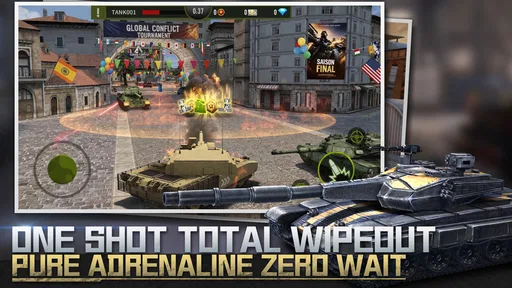
Our Review of Iron Force
 Analysis by Appyee
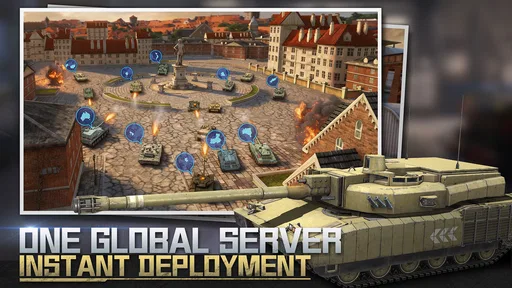
I approached Iron Force as a quick-action tank game rather than a slow military simulator, and that distinction matters from the first match. Developed by COOLFISH GAMES, it puts the focus on online multiplayer battles where movement, aiming, timing, and target selection matter more than reading long menus or building a complicated campaign. I found it easiest to enjoy when I had a few spare minutes and wanted direct action, not when I was looking for a detailed single-player war story.
The game is free to download and is rated Teen, so it is aimed at players who are comfortable with competitive combat and a more intense arcade presentation. It has been available since April 8, 2014, and its long presence on mobile is reflected in a large player audience: it has passed one million installs, with an average rating of 3.0 from around 86 thousand ratings and about 20 thousand written reviews. Those numbers suggest a game with real staying power, but also one that divides opinion. My experience explains why: the core battles are accessible, while the surrounding progression and spending decisions require more patience.
What to decide before installing
The first question is not whether you like tanks. It is whether you want an arcade-style online multiplayer action game that gets you into combat quickly. Iron Force is a better match for someone who enjoys short competitive sessions, repeated practice, and the satisfaction of improving aim and positioning. It is less suitable for anyone expecting a historically accurate tank simulator, a large narrative campaign, or a relaxed game that can be played entirely offline.
I would also decide how much tolerance you have for repetition. Multiplayer action games often rely on learning familiar rhythms: move, line up a shot, avoid exposing yourself unnecessarily, and choose the next target before the current exchange ends. Iron Force builds its appeal around that loop. The fun comes from becoming more deliberate with every match, not from discovering a fresh story chapter each time you open it.
Device compatibility is fairly broad for a modern mobile game. The current version is 4.14.0 and requires Android 6.0 or later. That makes it approachable for many Android users, although smooth performance can still depend on the phone, connection quality, and what else is running in the background. Before a serious session, I would close demanding apps and use a stable connection. In a competitive tank battle, a delayed response is much more frustrating than it is in a turn-based game.
How the basic battle loop feels
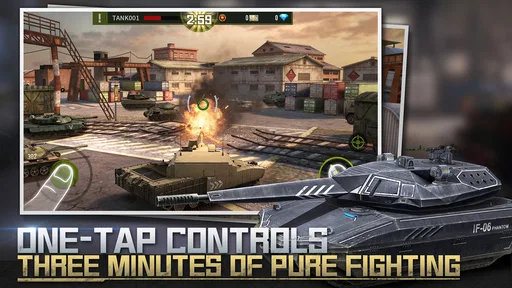
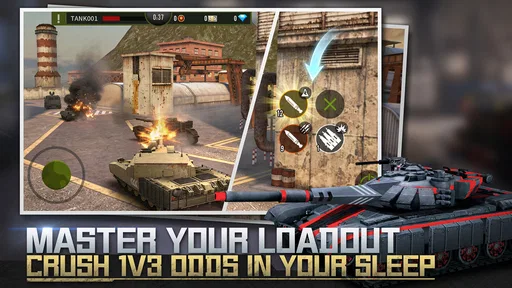
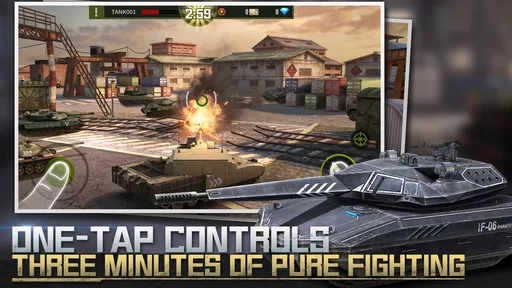
Iron Force communicates its purpose clearly through play. You enter a battle, control a tank, search for an opening, and try to deal damage without making yourself an easy target. The controls are designed for touch, so the early matches are not difficult to understand. What takes longer is developing a feel for movement. New players often concentrate so heavily on aiming that they forget a stationary tank is a predictable target.
My most useful early adjustment was to treat movement as part of aiming rather than as a separate task. I would make a small repositioning move, pause long enough to line up a shot, then move again instead of driving in a straight line. This is a simple habit, but it makes the game feel less random. It also helps reveal whether I was losing because of poor timing or because I was choosing bad engagements.
The game works best when I accept that not every opponent needs to be attacked immediately. If another tank is already under pressure, joining the exchange can be more useful than chasing a distant target. Conversely, following an opponent into an exposed position can turn a winning situation into a quick defeat. That decision-making layer is where the action becomes more interesting than simply tapping whenever a target appears.
Why the multiplayer focus is its main strength
The strongest reason to try Iron Force is the immediacy of its battles. There is no need to spend a long time learning a fictional world before reaching the central activity. If I only have a short break, I can use it for a focused match and leave without feeling that I stopped in the middle of a large story mission.
That structure also makes the game easy to recommend to friends who enjoy competitive mobile play. A new player can understand the broad objective quickly, while a more experienced player can still work on positioning, target priority, and efficient use of cover. The difference between a careless approach and a thoughtful one becomes noticeable, which gives repeated sessions a practical purpose.
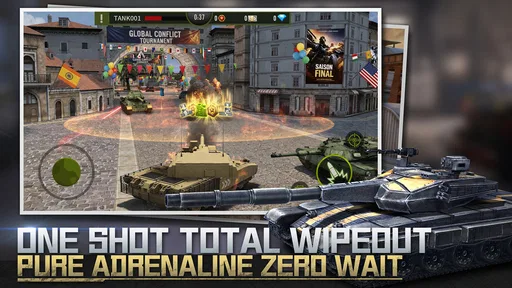
Another strength is that the tank theme gives the action a clearer identity than a generic arena shooter. The pace is not only about reflexes. The weight of the vehicle, the need to face a target, and the consequences of exposing yourself create a different kind of tension. I would not call it a full simulation, but it has enough tactical flavor to reward players who think one move ahead.
For everyday use, I see it fitting a commute break, a short evening session, or a few matches while waiting for an appointment. The important condition is having a dependable internet connection and being willing to stop after a match rather than expecting a completely uninterrupted experience. It is a game I open for active participation, not background entertainment.
Practical habits that improve the first sessions
My first tip is to spend early matches learning the controls instead of measuring success only by victories. Pay attention to how quickly your tank responds when turning, how much space you need to aim comfortably, and how exposed you become while pursuing an opponent. These details are more valuable than rushing into a fight simply because a target is visible.
Second, avoid treating the center of a battlefield as automatically important. A central position may offer access to several targets, but it can also expose you from multiple directions. I had better results when I used the edges of an engagement to observe where opponents were committing, then moved in after their attention was divided. This approach is slower, but it reduces unnecessary damage and makes each attack more intentional.
Third, separate a bad result from a bad strategy. Sometimes an opponent is simply better positioned or more accurate. Instead of changing everything after one defeat, I would ask one specific question: did I lose because I attacked too early, stayed still too long, or failed to notice another threat? That small review turns repeated matches into practice rather than frustration.
A less obvious trade-off is that cautious play can help survival but reduce your influence on the battle. Hiding indefinitely is not a winning strategy either. The useful middle ground is to wait for a favorable opening, then act decisively. Iron Force rewards players who can switch between patience and aggression instead of choosing only one style.
Where it wins, and where another game may fit better
I’d judge Iron Force less by the excitement of its first few battles and more by whether I still want to return once the controls feel familiar. Its focused tank combat can reward small improvements in positioning and timing, but the same loop may lose its pull if progress starts to feel like repetition. Thinking about what keeps a short-session game useful—and what makes another style a better fit—helps set up the longer-term question.
Iron Force for direct action and gradual improvement
Compared with story-driven action games, Iron Force wins through repeatable competition. There is less emphasis on scripted spectacle and more on the small decisions made during a live battle. If you like learning an opponent’s habits, refining your routes, and improving through repetition, this format has a clear advantage.
It also suits players who prefer vehicles to characters with traditional shooting abilities. Tank combat changes the rhythm of mobile action. You are not simply running around looking for a faster reaction; you are managing approach angles, exposure, and the timing of an attack. That makes the game a reasonable choice for someone who finds ordinary arena shooters too frantic but still wants multiplayer pressure.
The downside is that the same structure can become repetitive. If you need a strong narrative, constant environmental variety, or a large collection of unrelated activities, the focused tank-battle format may feel narrow. A campaign-oriented action game would be a better fit for a player who wants progress to be tied to story events rather than repeated competitive encounters.
When a simulator or slower strategy game is a better choice
Players searching for authentic military detail should set their expectations carefully. Iron Force is built for accessible action, not for the complexity of a dedicated tank simulator. A simulator may offer deeper vehicle handling, more technical systems, or a slower pace that rewards careful planning. That can be more satisfying if realism is your main reason for playing.
On the other hand, a turn-based strategy game may suit someone who dislikes pressure from live competition. Turn-based alternatives give you time to consider every move and usually make connection quality less central to the experience. Iron Force is better when you want immediate decisions and the possibility of being punished for hesitation, but that same immediacy can be tiring after a long day.
There is also a meaningful difference between playing against people and playing against predictable computer opponents. Multiplayer battles can feel more surprising because human players change their behavior, but they can also be less forgiving. If you want a calm practice environment, a single-player title may be more comfortable. If you want the satisfaction of adapting to unpredictable opponents, Iron Force has the stronger case.
Understanding the free-to-play commitment
The download is free, but optional in-app purchases range from $0.99 to $99.99 per item. I would treat that range as a reason to decide on a personal spending limit before becoming invested in progression. The free entry point makes it easy to test the controls and overall pace, while the purchase system means the long-term experience deserves more attention than the initial download suggests.
My advice is to play enough free sessions to answer three questions before spending: Do I enjoy the battle controls? Am I improving through practice? Do I still want to play when a match does not go my way? If the answer to any of these is no, buying something is unlikely to solve the underlying problem. Spending can be reasonable for a game you already enjoy, but it should not be used to discover whether the core loop is enjoyable.
This is also where Iron Force may be less appealing than a premium game with a one-time purchase. A premium alternative can offer a clearer cost from the beginning and may avoid the temptation to keep investing. Iron Force has the advantage of being easy to try, but the trade-off is that long-term value depends on how comfortable you are with its free-to-play structure.
The cost of switching from another tank game
If you are coming from a different tank game, the main switching cost is not learning the idea of aiming. It is adjusting to Iron Force’s particular tempo and touch behavior. Your instincts about when to attack may not transfer perfectly. A player used to slow, defensive simulation-style encounters may initially rush too much, while someone coming from a fast arena game may expose the tank without respecting positioning.
I would give the game several sessions before deciding whether it fits. Use that time to test different approaches rather than repeating one habit. Try a cautious opening, then a more aggressive one, and compare which mistakes keep appearing. This is more useful than judging the game only by the first battle, when the interface and controls are still unfamiliar.
There is also a social switching cost. Multiplayer games are more enjoyable when friends are willing to learn the same rhythm, but not everyone wants to coordinate around an online action title. If your group prefers casual puzzle games or offline campaigns, Iron Force may be something you play alone even if it was designed around competition. That does not make it a bad choice, but it changes the kind of value you get from it.
For players concerned about age suitability, the Teen rating is important. I would consider the rating alongside the competitive nature of the game, especially for younger players who may react strongly to losses or feel pressured by optional purchases. Adults deciding whether to recommend it to a teenager should explain that free access does not mean every progression choice is free, and that taking breaks is part of keeping competitive games enjoyable.
Who should install it
I recommend Iron Force to players who want a free way to try online tank battles, enjoy improving through repeated matches, and prefer direct action over a long campaign. It is especially appealing if you like the idea of making small tactical choices while still having controls simple enough for a phone or tablet.
I would skip it if you need offline play, dislike competitive pressure, want a realistic military simulator, or prefer games with a clearly defined ending. I would also be cautious if you are easily frustrated by repeated losses or do not want to manage optional spending. Those are not minor details; they affect whether the central loop feels motivating or exhausting.
After playing it, my recommendation is straightforward: try the free version, focus on movement and positioning during the first sessions, and decide based on the battles themselves rather than the promise of future progression. Iron Force is at its best when you want compact, competitive tank action and are happy to improve one match at a time. It is not the most complete choice for every action fan, but it has a clear identity and enough tactical texture to earn a place on the phone of the right player.
The 3.0 average rating tells me to keep expectations realistic rather than treating the game as a universal recommendation. Its large audience shows that the concept continues to attract mobile players, while the mixed reception points to the friction around repetition, competition, and purchases. For me, that balance leads to a conditional recommendation: install it if online tank battles are exactly what you want, play without rushing into purchases, and move on to a different category if you are really searching for story, realism, or relaxed offline play.
In short, COOLFISH GAMES has made a focused action game that is easy to sample but more demanding to judge fairly. The first match tells you whether the controls appeal to you; the next several reveal whether you enjoy the decisions behind them. If that learning process feels rewarding, Iron Force can provide a useful short-session habit. If it feels like repetition without improvement, another type of mobile action game will probably serve you better.
Verdict
Strengths of Iron Force
- Quick matches are easy to start, even when you only have a few minutes.
- Several tank types encourage different playstyles and team strategies.
- Simple controls make aiming and movement accessible to new players.
- Regular events can provide extra goals beyond standard multiplayer battles.
- The colorful 3D visuals run smoothly on many modern mobile devices.
Limitations of Iron Force
- Progression can feel slow without frequent play or premium purchases.
- Random matchmaking may place inexperienced players against stronger opponents.
- Energy, upgrade, or event limits can interrupt longer gaming sessions.
- The interface may feel crowded with currencies, offers, and notifications.
- Some battles become repetitive after mastering the available maps and modes.
Similar Picks in This Category
View All
Temple Run 2: Endless Escape
Imangi Studios4.1

PUBG MOBILE
Level Infinite4.3

Free Fire: 9th Anniversary
GARENA INTERNATIONAL I4.4

Talking Tom: Hero Dash Run
Outfit7 Limited4.3

slither.io
Lowtech Studios3.9

Sniper 3D:Gun Shooting Games
Wildlife Studios4.6
Frequently Asked Questions
What is Iron Force, and what can I expect from the gameplay?
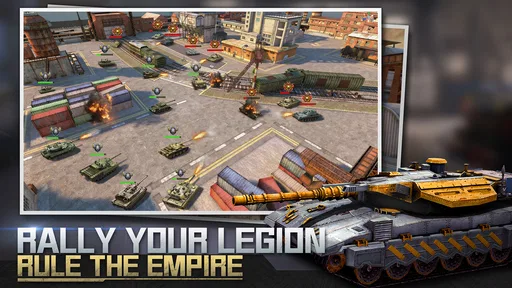
Iron Force is a multiplayer tank battle game focused on fast-paced, team-based combat. After choosing and upgrading a tank, you enter online matches against other players, usually working with teammates to destroy the opposing force. Battles are easy to understand but require practice, positioning, aiming, and good timing. It is best suited to players who enjoy competitive action games with short, repeatable matches.
Does Iron Force require an internet connection to play?
Yes, Iron Force is primarily designed as an online multiplayer game, so a stable internet connection is generally required for battles and many of its main features. Playing over Wi-Fi or a reliable mobile-data connection is recommended because interruptions can affect matchmaking and performance. Some menus or non-battle sections may remain accessible offline, but the core tank combat experience depends on connecting to the game’s servers.
Is Iron Force free to download and play?
Iron Force can generally be downloaded and played without paying an upfront purchase price. However, the game may include optional in-app purchases for virtual currency, upgrades, resources, or other items that can speed up progression. You can enjoy the basic experience without spending money, although advancing tanks and competing against stronger opponents may require patience. Parents should review device purchase settings before allowing children to play.
Does Iron Force include different tanks and upgrade options?
A major part of Iron Force is collecting, improving, and customizing tanks for battle. Different vehicles can offer varied strengths, such as durability, firepower, mobility, or defensive capability. Upgrades help improve performance as you progress, but stronger equipment may require time, resources, or premium currency. Before downloading, players should understand that progression is closely connected to repeated matches, resource management, and ongoing tank development.
Is Iron Force suitable for children and casual players?
Iron Force is relatively easy to start because its controls and objective are straightforward, making it accessible to casual players. Nevertheless, online competition, chat or social features, advertisements, and optional purchases may make it more appropriate for older children and teenagers with supervision. The game can become demanding as opponents improve, so players who dislike competitive pressure or progression systems may find the experience less relaxing over time.
Play our best games!


